Showing posts with label athletics. Show all posts

Friday, August 8, 2014

Three BYU images that made me cringe (and laugh) this week

Image #1:  The Presidential Inauguration Invitation (Are there storms ahead for BYU?)

On September 9th, Kevin Worthen will be inaugurated as the 13th president of BYU.  I know this because I received a formal invitation to the inauguration activities in my campus mail box last week.  Like most of the communications that come from the President's Office at BYU, the invitation was highly formal and signaled the formality and tradition associated with the event.  Like most formal invitations, it was also highly impersonal and forgettable, except for the curious image that appeared on the front cover (see below):


I didn't notice it at first, but the tone of the cover raises some funny (if not alarming) questions about the next few years at BYU:  Is there a storm brewing?  Are dark clouds ahead? I wasn't worried about the new President, but should I be?

It's a nice enough image of an iconic aspect of BYU, but it's a strange image to select to announce this particular event.  Dark, ominous clouds aren't really what I would use to represent an event that most would associate with new beginnings, renewal, and optimism.  I'm actually looking forward to President Worthen's administration and have no reason not to be optimistic, but optimism isn't what I feel when I look at this invitation.


Image #2:  The 2014 BYU Football T-Shirts

After I read this story, I started to wonder if BYU Athletics and the President's Office might have been using the same marketing intern this summer.  In what I see as delicious irony, it was revealed this week that BYU Football's anticipated 2014 slogan ("Rise as One") has already been used by. . .wait for it. . .Budweiser of all corporations (you couldn't make this stuff up), not to mention by Nike the year before .  Not really the association the athletic department was going for.  Apparently, no one had the 12 seconds it would have taken to do a google search of the slogan before printing thousands of t-shirts.


Image #3:  "Please tell me he's not one of our alumni" 
People tend to turn into idiots when they have a microphone, news camera, or reporter in front of them, as demonstrated very well by Cliven Bundy over the last few months.  Not only are Bundy's views on government extremist and skewed, it appears that he is also racist and somewhat deluded.

I cringe anytime I see any news story associated with he or his family, but especially when I saw this accompanying photo this week (look at the t-shirt his son has on).

I don't know if Cliven Lance Bundy (the son) ever attended BYU, but just him wearing the shirt in front of reporters is probably enough to make the Alumni Association pretty nervous.


So, to the President's Office, BYU Athletics, and the Bundy clan--thanks for making me laugh this week!  Here's to hoping the press for BYU is a little less embarrassing next week.


Friday, March 28, 2014

A potential game changer for college sports: Unionized athletes

Kain Colter, the outgoing quarterback at Northerwestern
Yesterday, Michael Tarm of the Associated Press reported on the National Labor Relations Board's ruling Northwestern University can create the first-ever union of college athletes.  While the ruling only applies to Northwestern, it has the potential to dramatically alter the landscape of college athletics, athletic department budgets, and the experience of student-athletes.
that football players at

At the core of the decision was the question of whether football players at Northwestern qualify as "employees" of the university?  In his ruling, Peter Sung Ohr, the National Labor Relations Board (NLRB) regional director argued that the players meet the two major criteria for employees:  first, they are "compensated" through athletic scholarships and, secondly, they are under the strict and direct managerial control of coaches and athletic administrators.  In his 24-page decision, he went on to say that players are "identified and recruited . . . because of their football prowess and not because of their academic achievement," citing a lack of any real evidence that scholarship players are ever allowed to put academics first by missing games or practices in order to attend to academic obligations.

These are murky waters that Northwestern's players union, as well as the NCAA and all of its member institutions, are wading into.  College sports have long been held up as a model of amateurism and are viewed by many as the pure and wholesome alternative to the greed and commercialism of professional sports (this is particularly true at this time of year when the country is caught up in the romance and drama of the NCAA men's basketball tournament with its narratives of the underdog school and players who play for the love of the game).  So, if unionizing were to become widespread among college athletes, fans may not be so quick to view them as the noble, self-sacrificing "student-athletes" that are portrayed in the NCAA's recent marketing campaigns.

At the same time, Kain Colter (a former Northwestern quarterback,who has been the public face and leader of the push), his teammates, and their supporters have a fair argument.  For athletes participating in "revenue sports" (e.g. football and men's basketball), their lives look a lot like a professional athlete in that their in-season time commitment approaches that of a full-time employee, they do receive compensation (though minimal) for their involvement, and their lives are very highly structured by coaches who dictate how they spend their time and what other activities they are involved in.  In short, they look a lot like institutional employees, but without many of the protections that an employee in another part of the institution might have (e.g. coverage of "work-related" medical expenses).

At this point, the goals of the College Athletes Players Association (CAPA), which is the group that will represent the union, are to ensure coverage of sports-related medical expenses, advocate for policy changes that will help to reduce head injuries, and to begin discussions about the possibility of allowing college athletes to pursue commercial sponsorships.  It's this last one that will raise eyebrows, again, because it calls into question the notion of amateurism that has made college athletics palatable, even when its dark side has reared its head.

For the time being, this ruling only effects private institutions, and only football and men's basketball players on those campuses.  But, like ESPN legal analyst Lester Munson has pointed out (+Lester Munson), the ruling could quickly snowball to effect a much broader range of institutions.

There is a fundamental tension at the heart of this issue between protecting the rights of athletes and preserving the romanticism of amateur college athletes.  Is this the beginning of the end for amateurism in college sports?  Just a necessary protection for college athletes?  Which side of the fence do you come down on?  Which side of the issue should be more heavily weighted?


Friday, November 15, 2013

Educating the Whole Athlete: The Georgetown University 'Hoyas Lead' program

I'm often critical of intercollegiate athletics in these posts; however, as a former student athlete I do recognize the contribution that college sports can make to a student's development.  The problem is that most large Division I institutions are not as strategic and intentional about creating athletic programs that facilitate this growth as they could be.  There are, however, some notable exceptions.

One institution that seems to have gotten it right is Georgetown University.  Now in its second year, Georgetown's Hoyas Lead program is a very intentional, organized, and well-supported attempt to make good on the institutions philosophy that athletics should, ultimately, be focused on achieving developmental outcomes for participants.  The existence of the program isn't all that noteworthy because virtually every Division I athletic program has some kind of program, initiative, or council whose stated mission is to support the overall development of student athletes.  What is impressive about Georgetown's program is it's comprehensive approach, its scalability, and the high level support it has received on campus.  Indeed, there are a number of things about Hoyas Lead that set it apart from the myriad other programs which seem to only pay lip-service to their missions.

Visible, public, and financial support from the Univ. President.  President John J. DeGioia created and funded (from his own budget, not athletic monies) the assistant athletic director position with responsibility for overseeing and administering the Hoyas Lead program.  If nothing else, this is a symbolic gesture that conveys a message of urgency and importance to both the athletic department as well as the rest of the campus community that he's serious about providing a certain kind of experience to student athletes.  And, because he has financial skin in the game, he's likely to be more interested in what's happening in the program and following up to ensure that they are achieving their outcomes.

The right leader.  Hoyas Lead is led by +Michael Lorenzen, Georgetown's Assistant Athletic Director for student-athlete leadership and development.   Lorenzen brings a unique background and set of experiences to his role that position him to have credibility with stakeholders both in and outside of the athletic department.  He's a former Division I head coach (and was very successful when judged by traditional measures of athletic success), which earns him credibility with coaches at GU;  ran a consulting firm for college athletics administrators, which means he understands the administrative realities of NCAA athletics; and has a PhD. in leadership education and is a well respected scholar in that field--a tremendous asset when it comes to interfacing with faculty members and administrators at GU who don't live in the fieldhouse.  It's this last credential that makes Lorenzen most unique.  Very rarely does an athletics department hire an "academic" to fill these kinds of roles.  The fact that they have isn't just savvy, it means that Lorenzen has a philsophical and research-based approach to his work.

Bridges across campus.  Although Hoyas Lead is administered by the department of athletics, it brings together colleagues from athletics, academics, and student services (a rare feat in the academy).  Not only does this mean that its visibility is elevated, but by bringing together experts from all three of these areas, GU is able to provide a much better service to student athletes.  Compare this to the typically insular attitude and approach that "athletic success centers" typically take (case in point:  I have sent probably 10 emails to the director of my instition's "Student Athlete Academic Center" over the last year to notify him of first-year students that are struggling and, in every case, the response has been give or take a few words "Thanks, we'll take care of it."  No additional questions, follow-up, or requests for support from the academic side of the house).

A multi-faceted approach.  While Hoyas Lead does include the traditional orientation and leadership coursework that is found in a lot similar programs, it also includes co-curricular components (e.g. field work, mentoring, opportunities to teach, and service).  Even more notable is the fact that Lorenzen spends a good chunk of his time consulting and interfacing with individual head coaches and athletes.  He observes teams "in the field" so to speak by attending practices, games, and team meetings to get a sense for team culture.  Then, meets with individual coaches and athletes to integrate the more formal parts of the program to the unique needs of individual teams.  The most important by-product I can see from this approach is that he now has relationships with coaches and athletes.  And, relationships are vehicles for change.

The right not to participate.  I've written before (quite adamantly at times) about the need for institutions to require more of students.  And, I still assert that for the overall campus population, requiring students to engage in a small number of practices that clearly lead to positive outcomes is a good practice.  However, in this case, I think Lorenzen has been wise to shy away from requiring every student athlete to participate.  The first and second year curricular component is "required," but technically isn't mandatory and Lorenzen doesn't hunt anyone down who doesn't register for the coursework.  While this is potentially problematic because it leaves students wondering what the term "required" really means, it's not a bad approach to have an expectation that everyone will participate in the low-level introductory aspects of the initiative.  Once student athletes reach their junior year, their participation is completely voluntary.  This means that Lorenzen can devote the most valuable resources and impactful aspects of the program to those students who are truly committed to and invested in growing as leaders.  And, in reality, without a voluntary buy-in to things like service, mentoring, and the like, students aren't likely to grow anyway.  The key is in developing a culture and expectation among new students that carries through to these later years.  That way, it's understood that "Hoyas lead," and there's some social pressure to participate, but ultimately it's up to each individual to take up that opportunity.

Georgetown has provided a great model for the rest of the NCAA to follow.  Maybe the women's hockey teams at Ohio State and Bemidji State should pay attention.


Friday, July 19, 2013

Community basketball courts as a model for schools

About two months ago, Provo City opened it's new Community Recreation Center.  It is a fantastic facility.  It's well designed, has state of the art equipment, is located in the heart of the city, and is a great value (a 12 month pass for my family was just under $400).  On average, I visit the rec center about once a week, mostly to use the fitness center.  To get to the fitness center, I have to walk by the four basketball courts located on the main level of the facility.

For me, they are one of the most interesting features of center, because in some sense, they have given rise to their own mini-community.  I realized this last week when it occurred to me that nearly every time I walk by the basketball courts, I see a young man from my neighborhood there playing basketball.  Sometimes he is there alone, other times he is playing one-on-one with a friend, and on other days he is in the middle of a pick-up game with a little larger group.

But, the biggest thing I've noticed about him is how much his game has improved in the last six months.  I know this because last winter, I saw him playing basketball in our church one night and, to put it bluntly, he was awful.  He couldn't make anything further than four feet from the basket, he missed half the lay-ups he took, and it was painful to watch his jumpshot.

When I saw him last week, he was by no means ready for the Timpview HS basketball team, but he was holding his own against a group of average guys his same age.  He even "looked" like a basketball player--he wore the basketball shoes you'd expect from a relatively serious player, had on the long basketball shorts that you see when you watch an NBA game, and even had the same type of socks I know HS basketball players wear.  It was like he had been enrolled in some kind of basketball school where they taught him how to shoot a jumpshot, how to play defense in the low post (he's a pretty tall kid for his age), and even how to dress.  In fact, he has been in "school," just a different type of school than what we typically think of.

While, I highly doubt that Provo City designed the basketball complex to facilitate learning, it has a number of features that make it a great place where learning (basketball-specific learning) can take place.  It's a lot like the neighborhood boxing gym or skateboard park in that it brings together a mini-community of people who are all interested in and engaged in the same activity, but who all possess varying degrees of skill and experience.  And, any organization who cares about how its members learn could take a few cues:

1.  A focus on authentic learning.  The kids and adults who play basketball at the rec center aren't participating in artificial drills, practice sessions, or contrived activities.  For the most part, they are engaged in real basketball games that allow them to participate in all of the aspects of the game of basketball from conditioning, to shooting, to defense, to rebounding.  So, each time they play, they're developing the full range of their game.  In addition, real games are much more motivating than artificial activities, which impacts learning and development more than nearly any other factor in the learning environment.

2.  Openness and opportunities to watch other learners in practice.  The three full-size courts in the complex are located next to one another in a large open space, without any dividing walls.  Additionally, there is an elevated track above the courts, and glass windows looking into the three-court complex.  Although the fourth court (a smaller one) is separated from the other three by a thin wall, it is next door, and also surrounded by glass windows.  This all means, that regardless of what court I'm playing on, I can see what's going on in the games next to me.  This is particularly critical for novice players because it means they have the potential to watch more advanced players in the game next to them.  So, a young player can see what good defense looks like, watch a reverse lay-up, or stand in awe at a smooth jumper.  In essence, it provides a novice with access to a wide range of practices within the community.  That access and the observational opportunities that come with it are invaluable for novice learners.

3.  Learners of various skill level together in the same space.  Because of the open design of the basketball complex and that fact that anyone can use it, there is a wide range of basketball ability represented on the courts at any one time.  Just last week when I was there, I saw one game being played by middle-aged men, another game made up of kids from the age of 10 - 15, and a Dad and his three kids playing on another court.  Again, this mix of ability levels means that new basketball players are likely to be playing right next to advanced players, which provides great opportunities for learning.  And, in addition to providing benefit to novices, it may even provide mentoring opportunities for veterans or "experts" looking to give back.

The take home message here is that learning is inherently a social enterprise that occurs most effectively when it becomes a community activity.  However, much of the formal learning that takes place in schools looks very different than the kind of learning I've described above.  Instead of being based in community, where learners from varying skill levels come together and watch, learn, and participate together, it is terribly fragmented.  It happens in isolated classrooms, where everyone has the same relative degree of knowledge or skill, and is rarely authentic in the ways we hope it would.

So, what would a school look like if it were patterned after a boxing gym, a basketball complex, or a skate park?  Could it work?  And, how would it be administered?


Friday, November 30, 2012

Exploitation of College Athletes Revisited: Maryland's move to the Big 10

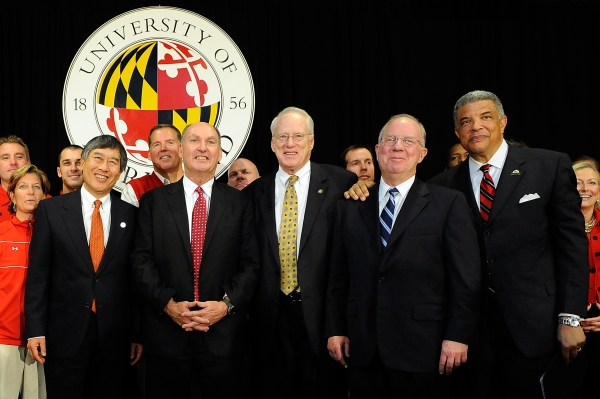
On November 20th, the University of Maryland at College Park announced that it would be leaving the ACC (not a slouch of an athletic conference by most standards) and becoming part of the Big 10 Conference.  It was a curious move for all sorts of reasons (e.g. with the exception of Pitt & Penn St., Maryland is not a geographical neighbor to any of the other member schools of the Big 10), not the least of which being the way the decision was made and announced--the Board of Trustees started and finished the process in under three weeks and some regents weren't aware of the final decision until hours before it was announced to the media.  

Not surprisingly, finances played a big role in the decision and in providing a rationale for the move, Maryland President Wallace Loh made a rather interesting statement about Maryland's future potential to use the athletic department to subsidize other parts of the university (something many would call a pipe dream).  As reported in Inside Higher Ed, Loh has publicly declared that "substantial funds" from Maryland's new revenue stream as a member of the Big 10 Conference will be used to support the educational mission of the university, specifically through financial aid for needy students.  Loh then asserted that Maryland is "doing nothing less than developing a new financial paradigm for intercollegiate athletics."

On its face, Loh's statements and ideas seem laudable.  What could be better for college athletics than an institution where the athletic program, rather than being a drain on institutional resources, puts money back into the pipeline and for needy students, no less. However, viewed another way, this is just another example of athletes--specifically, those who participate in high-profile, revenue-producing sports (which at most institutions means football and men's basketball)--whose talent is used to bring prestige and financial gain to the larger institution.  What's more, writers like William Rhoden, would argue that systems such as the one Loh is advocating for, have historical echoes to early American History when African American men were oppressed for the benefit of the more privileged class of American society.  In his book Forty Million Dollar Slaves, Rhoden provides a narrative of black athletes in the US (who, make up the majority of athletes of high-profile teams in Div. I college athletics).  He describes the evolution of professional and collegiate athletics in the US as one that led black athletes from literal plantations--where sports were used as a distraction to quell uprisings among slaves--to symbolic plantations where professional sports franchises and intercollegiate athletic departments continue to exploit black athletes' skills.

Critics of the views put forth by Rhoden and others are quick to point out that high-profile scholarship athletes receive scholarships that cover tuition, books, room, board, and virtually any other expense they might incur directly related to their enrollment in the institution.  Further, by providing opportunities to black athletes (often from urban areas and familial cultures where higher education isn't the norm) to attend college, the institution does much more than give someone a chance to play basketball, they change his life trajectory.

My purpose here isn't to argue for one position or another, just to raise some interesting questions about college athletics in general, and Wallace Loh's views in particular.  Is a free college degree and the opportunity for a better future enough "payment" for what an athlete (or team of athletes) brings in for a university?  And, how often does the four-year athletic scholarship really lead to the opportunities cited by proponents of big-time college sports?  What does it mean for one student (or group of students) to subsidize the cost of enrollment for another group of students?


Friday, November 9, 2012

Another exploitation of athletes . . . this time in the NFL

I've written before on this blog about the problem of exploitation among athletes in high-profile sports (i.e. football & men's basketball).  Thanks to Allison Morris from Accountingdegree.com for sharing this graphic that explores a problem associated with the NFL, namely the high rate at which retired players experience financial duress (3 in 4 are in financial trouble within two years of retirement).  Clearly, the league cannot control the decisions of its players, but this work raises interesting questions about what role major sports leagues should play in preparing players for their post-athletic futures.  How much responsibility does an employer like the NFL bear to prevent these kinds of problems?


Please Include Attribution to AccountingDegree.com With This Graphic Benched and Broke Infographic

Friday, April 6, 2012

A new way to exploit college athletes


Image appearing in the 5 April Equity Express Email


Intercollegiate athletics are a controversial topic in higher education on a number of levels.  And, like just about any other part of the academy, athletic departments have their problems.  One common critique of the current big-time college sports system is that student-athletes who are members of prominent teams at high-profile schools are exploited in that their success on the field, in the pool, or at the ballpark brings huge financial gains for others (e.g. their coaches, their institutions, or the governing body that "protects" them).  For a couple of good reads on these issues see Murray Sperber's Beer and Circus and William Rhoden's Forty Million Dollar Slaves.


Yesterday I saw a new way to exploit college athletes and, ironically, it came from an organization who claims to "speak up for students."  The Education Trust sent an email yesterday to what I am assuming is a very long mailing list.  In the body of the email was the image at right, which compares the University of Kentucky's point total from their National Championship win with their six year graduation rate. Clearly, it was a clever and timely move that was effective in communicating a key message for The Education Trust (i.e. There is a problem with the graduation rates in American institutions.  I agree, those of us who make our livings in higher education need to find a way to ensure that more students graduate from our institutions.  What I do object to, however, is The Education Trust's use of an individual institution and further, 15 members of a single athletic team at that institution, to promote their agenda.  By linking the institution's graduation rate with the men's basketball team, Education Trust seems to imply that the basketball team also has a low graduation rate and that the members of the team are poor students.  Of course, not every reader of the email will make those assumptions, but the design and tone of the message seem to imply it.

I don't have any idea what the graduation rate for John Calipari's team is.  And, it's quite possible it is close to the institution's rate (if not lower); however, for The Education Trust to throw the entire team under the bus seems uncalled for.  Additionally, although I have no data to back this up, I wouldn't imagine that UK's graduation rate is all that different from many other teams in the recent NCAA Men's Basketball Tournament, so, to single out one institution seems shady as well.

As much as I agree with the mission of Education Trust, they owe the University of Kentucky as well as the members of the men's basketball team an apology.

Friday, March 16, 2012

How good does someone have to be to earn a free pass when they're bad?

Earlier this week, one of the top stories in Provo, UT (where I live and work) was the Provo School District's suspension and planned termination of a popular football coach at one of the local high schools.  It is a sad story on a number of levels:  at least one person (and probably more) will likely lose his job, students and athletes at the school will have to deal with a number of distractions for the rest of the academic year, community members are upset, and public education (especially athletic departments at public institutions) has been given another black eye.  As I watched things play out over the last week, I couldn't help but think back to the Penn St. sex abuse scandal that dominated the media a few months ago.

Obviously, financial misdeeds seem incredibly benign juxtaposed with sexual abuse of children; however, there are some interesting parallels.  Both stories seem to illustrate a more general archetypal pattern of the fallen sports hero.  These stories contain a number of common elements.  First, the hero (usually a player or a coach, although in some communities some kind of athletic administrator may rise to this position) emerges through his (I use that pronoun intentionally here because I can't think of a fallen sports hero that isn't a male) consistent on-field success, contributions to the community (e.g. mentoring of young athletes, improved community morale around a winning team, charitable work, etc.), and general likability or charisma.  Note that this rise occurs over a number of years as in order to be considered a hero (rather than a one-season wonder) the character must establish an athletic dynasty, build a following in the community, and demonstrate (especially to those critics of traditional athletic culture) a level of integrity and commitment worthy of others' admiration.

The conflict in the story comes when the hero falls.  Although losing seasons may be part of this fall, losing alone isn't enough to qualify a narrative as a fallen sports hero story, because at their core, these are stories of betrayal and lost hope.  As much as we love our teams, we don't feel betrayed when they lose (in fact, the most die-hard fans increase their loyalty when losses pile up--do you know any Cubs fans?), just disappointed, frustrated, or maybe even angry.  Heroes fall when something disturbing happens in the overlapping space between their personal and professional lives, and we as their admirers are forced to confront a discrepancy between their actions and our idyllic image of them as societal models.  They break the law, mistreat individuals in their personal life, or in some other way act counter to the values we have previously believed they exemplified for us.  And, we are left feeling betrayed, hurt, and wondering if there is any good left in the world.

There are at least two typical responses at this point in the story.  First, athletic skeptics (and new believers who were once skeptics of athletics) use the fall as justification for their beliefs that athletics has nothing positive to contribute to the world (e.g. "All successful coaches cheat and lie and hot-shot players are entitled jerks who take what they want").  The other response, which is the more interesting one of the two, takes the form of praise for all the hero has done for the community and a profession of faith in the innocence and continued goodness of the hero.  This type of response is evident in a statement made by prominent author Stephen Covey, in support of Provo's current embattled sports hero:


"I believe in Coach Louis Wong. He is so much more than just a football coach. He represents Timpview      and he stands for excellence. He is as fine a man and leader as I know."


Another example from the hero's attorney:


 "What Lou did for the school and community went far beyond the field of play.  What he did is what we want our educators to do — care about the kids who are entrusted to their care, to help them, to teach them to make the right choices, to be team players, to cooperate and to work for what they get." 


While much of what is contained in these statements is probably true--I don't doubt that the coach really did care about students and players or that he possesses tremendous leadership skills--they make no attempt to address the wrongdoing.  Instead, they seem to imply that, because of the hero's long record of good deeds and established reputation as a good citizen, it isn't possible that he could be guilty as charged.  The same type of response was apparent in the Penn St. scandal as well when Paterno supporters criticized his termination by providing long lists of his good deeds (again, supporters rarely addressed the validity of the actual charges, just provided character references and expected that to be enough to clear him).  Beneath all of this rhetoric seems to be a belief that heroes', through their good deeds and exemplary lives, earn "free passes," that society is then obligated to accept as payment for wrongdoing.  

I don't know whether Louis Wong is completely innocent, just naive, or guilty.  We'll probably never know, and to give him any one of those labels would probably be overly simplistic.  However, it would be helpful if more of us were willing to admit that our heroes are usually both heroic and flawed as evidenced in this statement from Bob Gentry, interim Superintendent for the Provo School District:

"It’s extremely gut-wrenching and heartbreaking.  I know Coach Wong personally, and I think he’s a good man. I personally think he didn’t have criminal intent, but he made mistakes and we can’t ignore those mistakes." 


What would really be heroic in all of this would be for everyone involved to be completely honest about mistakes that were made.  That would include Wong as well as the former principal at the school, district officials, parents, assistant coaches, and anyone else involved.  But, that would be a fairy tale.


Friday, February 3, 2012

What if admissions offices cooperated rather than competed?

Earlier this week, Inside Higher Ed reported on initial results of the Predictive Analytics Reporting Framework and the potential for this data to connect students to those online institutions to which they are best suited (the title of this particular section of the article is "Match.com for Higher Ed").  The senior statistician for the project, Sebastian Diaz, comments that his data set positions admissions and recruitment officials more effectively find, recruit, and enroll those students who are most likely to be successful on their campuses.  But, the article points out that this sort of academic matching service would require a level of collaboration and sharing among institutions that doesn't seem very feasible at present.

On the surface, viewing admissions as a purely competitive process makes sense.  After all, for any given institution there is a limited number of students who are, first, at all interested in enrolling at that campus and, second, who are good candidates for the experience provided, whether that is an intimate liberal arts experience, a distance ed experience, or the traditional state school experience (if there is even such a thing any longer).  What's more, for a group of institutions who share much in common, this pool of students is largely the same.  So, at some level, it is perfectly understandable that institutions compete for students.

However, this standard view of the admissions process, while acknowledging the competitive dynamic among peer institutions, fails to acknowledge two things.  First, among institutions who are very different, there is no real need to compete for students.  Second, many of the students who apply to a particular school aren't students that school is competing for and, in fact, may be better candidates for another institution.  And, despite the best efforts of campus recruiters and sometimes very expensive marketing campaigns, campuses don't always get the students they want.  So, if you and I are both in admissions on our respective campuses (and lets assume we aren't at "peer institutions" but that our campuses differ in some meaningful ways) I will, inevitably, receive applications from students that my institution doesn't want, but that yours does (and the reverse is also likely to be true--you'll receive applications from students that I want).  The trouble is that we aren't ever likely to realize this or talk to one another about it.  Instead, we'll each send our diplomatically written "thanks but no thanks" letters to our respective applicants, they will hit the trail again hoping to find a school that does want them, and we will hope that the next application we receive is from a student we do want.  Ironically, we both have pieces of information that would be helpful to each other, but we'll never share it.

So, what if an institution worked to develop collaborative partnerships with a diverse group of institutions, whose missions, enrollments, geographic locations, were different from its own .  This might be something akin to the "bridging capital" Bob Putnam describes in his book Bowling Alone, that connects us loosely to people quite different from ourselves and that facilitates access to community assets and promotes information dissemination.  If these partnerships were formalized in some way, institutions could "compete" with their peers, by collaborating with their "distant relatives.  These partnerships might give member institutions access to students they may never have found and help students by connecting them with institutions better suited for their needs, interests, goals, etc.

Typically, college athletics is not a good place to look when trying to solve broader institutional challenges; however, in the case of admissions, we might be wise to make an exception.  Like admissions, the college sports landscape is highly competitive.  Each year there are a small number of blue-chip recruits that every Div I coach wants to sign and bring to campus in the fall.  But, once you get through those 100 or so athletes for the particular sport in question, things are a lot less competitive--athletes are trying to find coaches who want them and coaches are trying to find athletes who would be a good fit for their team and campus.  What's more, the NCAA's practice of classifying athletic programs into divisions (Division I, Division II, and Division III), there is a clear and simple way of knowing if another coach's program is a "peer" or a "distant cousin."  Consequently, it isn't uncommon for a Division I coach to court a recruit and then, after realizing   that she probably won't be recruited by top Div. I programs, to make a phone call to a fellow coach at the Div. II level to let the coach know that they ought to "take a look at her."  I saw this happen fairly regularly as a student athlete.  As an example, one of my teammates at Mars Hill College in the late 90s was initially recruited by a handful of good Div. I soccer programs; however, his standardized test scores were not high enough to qualify him to compete at the Div. I level (due to NCAA regulations).  At that point, the coach from one of these programs contacted his friend who was the head coach at Mars Hill and let him know that this player may be a good fit for the program.  In this situation, both my friend and Mars Hill benefited.  We got a great player who was a four year starter and all-region player, and he got a nice scholarship and a great experience at a small liberal arts college.  The Div. I coach didn't benefit directly from this exchange; however, in coaching, reputation is everything, so he likely benefited indirectly.  The difference, then, between athletics and admissions is that when an athlete isn't a good fit for a team, there is at least some chance that the coach who has turned him down might be able to help him find another home.

While it would take some coordination and there would definitely be complexities to work out, is there any reason why this sort of sharing and collaboration among distantly related institutions couldn't happen at the level of general admissions and even be formalized in some way?  If it were to happen, it would seem to require a few things:

1)  The right kind of groupings or consortiums:  As mentioned, if everyone in the partnership is competing for the same students, it isn't likely that much sharing will take place.  So, member institutions would need to be different enough that they aren't drawing from the same applicant pools.  At the same time, if the institutions are too different, they aren't likely to have applicants that, although not a good fit for one institution, would fit somewhere else.

2)  Very clear understanding of one another's missions:  If the members of the group don't know each other well (their missions, their geographic locales, their academic offerings, etc.), they won't be positioned to make good referrals.

3)  Lots and lots of trust and good will:  As with any social contract, the success of an arrangement like this would require a collection of campuses that are willing to commit to act in the interest of one another and of the students they serve.  At the point that one member starts to hold onto students who would be better served by another member of the group, just to bump enrollments and increase tuition, things will fall apart.  Similarly, if back-room alliances between selected members result, the whole enterprise is in trouble.

I'm not overly familiar with the admissions landscape, so it's possible that this proposal has grown from a gross naivete on my part.  But, as an occasional idealist and advocate for the power of community, I want to think that it has promise (or, better yet, that it is already happening in some corner of higher ed and I don't know it).


Friday, September 9, 2011

Should freshmen be allowed to play?

Stanford's Athletic Director, Bob Bowlsby, made waves this week with his call to ban freshmen from participating in intercollegiate athletics.  While some think such propositions are merely an aim to curb the trend of men's basketball players leaving for the NBA after their freshmen year (the NBA currently requires draftees to be at least 19 and one year removed from high school), Bowlsby's stated rationale is that sitting out a year would give student-athletes time to adjust to the academic rigors of higher education.

While the chances of such a proposal being accepted by the NCAA and its board seem like a longshot, it will be entertaining to see how the rest of college athletics responds and where the idea goes.  Even if some version of this proposal were to be accepted (some reports cite that Bowlsby has suggested mandatory red-shirting during the first year as a compromise of sorts), sidelining athletes, by itself, isn't likely to lead to the improved academic adjustment Bowlsby is hoping for.  Many athletics departments (including the one on my campus) have bridging programs designed to assist student athletes in making the transition from high school to college (both in and out of the classroom), which should become mandatory and monitored closely to ensure they are doing what they propose to do and not just orienting freshmen to the culture of athletics on a campus.  

The bigger issue here is the increasingly wide divide between the academic and athletic missions of big-time college sports institutions.  In an article published this morning in the Salt Lake Tribune, the University of Utah's head football coach, Kyle Whittingham, responded to Bowlsby's proposal.  As a fan of University of Utah athletics, I like Whittingham and think he has done a tremendous job with his team (they win games and rarely have the off-field problems that sometimes plague other high-profile teams).  However, his comments in the article reflect two problematic attitudes that seem to be prevalent among college coaches.

First, Whittingham's statment that "if a guy is ready to play, why wouldn't you play him?" suggests that he wants the best athletes on the field, whether or not they are ready for everything else that comes with being a college student (read: academics) In defense of the corps of coaches Whittingham represents, they face tremendous pressure to be successful and please alumni, donors, and administrators.  So, in many ways, they walk a difficult line as they try to put a good product on the field or court, while also pleasing those who want to hold their athletes to high academic standards.  The problem is that the pro-athletics voice is almost always stronger (and has deeper pockets) than any of the other stakeholders on a college campus.

Second, although the reporter for the story may have misrepresented Whittingham's views, the article suggests that Whittingham believes that if a student-athlete is "mature" enough to garner signficant playing time, it can be assumed that they are ready to take on a college academic load as well.  This seems like a huge stretch and one I'm sure would elicit countless anedcotes from faculty members and administrators demonstrating that athletic maturity/leadership doesn't always transfer into academic settings.  

Whittingham does, however, point out one of the biggest flaws in Bowlsby's proposal which is that it is a blanket solution for a problem that only effects a percentage of college athletes.  Of course, as a former student-athlete I am biased in my belief that there are plenty of athletes (even within high-profile football and men's basketball) who can balance athletic demands with the academic requirements of university life.  Barring all freshmen from participating punishes those who are well prepared and could potentially shield athletic departments from addressing problems which contribute to poor academic peformance (e.g. recruiting and signing students grossly underprepared for college, monopolizing athletes time by involving them in athletic activities for 30+ hours a week, and failing to provide sufficient support and resources to athletes to assist them in being successful in the classroom).  A better solution is to hold individual institutions and the NCAA as a whole more accountable for doing what they say they do--providing an experience for student-athletes that enhances their overall education.  


Friday, May 6, 2011

The University of Utah: From athletic rags to riches

Earlier this week the PAC 12 Conference announced a multi-billion dollar TV deal with ESPN and Fox.  The deal stands as the richest and most lucrative network tv contract a college athletic conference has ever struck and will bring member insitutions better than $20 million annually.  The news was particularly exciting for fans of the University of Utah because "the U." will become a member of the PAC 12 this fall.  Although Utah won't receive their full share of the tv earnings for a few more years, it is a big victory for their athletic department, not only because of the money that it will bring in, but for the exposure it will give the department and the university.

This week's announcement is just another part of the broader story of Utah's rise from a relatively unknown and uncelebrated athletics program (they were part of the unheralded Western Athletic Conference until about a decade ago when they moved to the equally mediocre Mountain West Conference) to the upper echelons of college athletics.  It's the sort of story every athletics program wishes they could tell and what drives the "athletics arms race" described by Murray Sperber in his book Beer and Circus.  So, why do some schools make it while others plod along year after year, barely keeping their heads above water?  Why was Utah different?

1.  Great Leadership:  Utah's department of athletics is led by one of the very best athletic administrators in the country, Chris Hill.  Not only is Hill a smart and hard worker, he understands the landscape of college athletics and academia having worked in a number of capacities at the University across the last 25 years, both inside and outside of the athletics department.

2.  Patience:  Utah's rise didn't happen overnight.  Hill has been at the helm for the last 24 years and it's taken that long to build the sort of program that exists at the U.  Plenty of other programs have had successful years and high-profile athletes, but Hill's teams have been consistently competitive over a long period of time and built a solid base of success and stability.

3.  Luck:  Utah owes a lot of its success to the instability among athletic conferences over the last few years.  Because of the amount of movement and shuffling over the last few years, conferences were looking to expand and bring in new members, so "mid-majors" like Utah were actually part of the conversation.  Without that kind environment, teams like Utah would never have been asked to sit at the table.

4.  Stability:  While the men's basketball team at Utah has been in turmoil for the last 7 years or so, the rest of the department has been pretty stable.  The wildly successful gymnastics team has been led by the same coach for the last 36 years (the only coach the program has ever had), the women's soccer coach is in his 10th year, the current football coach has been part of the program for nearly 20 years, and the women's basketball staff has been stable for the last decade.  That kind of consistency translates into success--success that big-time conferences notice and want to be associated with.

5.  The right market: Other than the Utah Jazz (who aren't likely to be fan favorites in the near future because of the rebuilding they are undergoing), University of Utah athletics are the biggest thing in sports for residents of Salt Lake City and the state as a whole.  So, the amount of fan support is where it needs to be and the U. isn't splitting crowds with major league franchises or other large educational institutions.

Of course, it's possible that the best idea in this post is #3 above and that Utah's ascendency has been due to nothing more than luck and timing.  I'm willing to admit that, but it's worth looking at their story to see what might be learned.

Friday, March 11, 2011

When ideals and viability collide

On Tuesday evening, the Provo School Board approved a renovation of the Provo High School football complex.  Anyone who has driven by the stadium knows that this sort of project is long overdue, particularly when Bulldog stadium is compared to its neighbor up the hill at Timpview High School.  The challenge for Provo School District is how to fund capital projects like this one, in the face of ever shrinking budgets and a reeling economy.  Not surprisingly then, Tuesday evening's conversation about the renovation at Provo High was dominated by talk of where the money will come from.  The Board of Education has committed $125,000 on the front end of the project and has agreed to subsidize the cost of replacing the track that surrounds the field, but falls far short of the nearly $1.5 million that is needed for the two proposed phases of the project. The Board's solution?  Sell the naming rights for the stadium and field to the highest bidder.

At first glance something like this seems like a fine idea and common practice in the world of sports.  After all, we could probably all rattle of a list of 5 or 10 athletic venues named after corporations (e.g. The Staples Center in LA, The TD Boston Garden, or Energy Solutions Arena in Salt Lake City).  The sense among Board Members on Tuesday was that everyone wins.  The district brings in a large sum of cash, student-athletes have a great venue to play in, community members have something to be proud of, and a local business gets publicity.  But, it seems like a slippery slope to me and one that leads down an increasingly problematic path where, eventually, educational ideals are likely to be compromised (as evidenced by this extreme case from a Sacramento School District).  Of course, community businesses have always been partners with local schools when it comes to athletics.  They hang banners at the fields, have their names in the program, and donate goods at reduced cost for concessions.  But, in large part, it avoids major problems and conflicts of interest because of its scale.  The banners are for the gas station down the street, the concessions come from the local grocery store, and the programs are paid for by the trophy shop around the corner.  In other words, the money put up is small and those contributing are people that have at least a small stake in what happens at the school on Friday nights.

Provo District, however, is headed down a different path by asking for million dollar donations.  That sort of invitation brings in a much different bidder--one with deep pockets no doubt, but whose intentions aren't likely to be as pure as the burger joint down the road whose owners have had children and grandchildren don jerseys for the school.  When asked who his potential donors were, JT McGraw (the driving force behind the project) mentioned that Frontier Airlines would be at the top of his list.  It's a savvy move considering their the airline's recent announcement, but one has to ask how much Frontier airlines really cares about Provo High athletics.  And, in addition to their name on the stadium, what else might they want to see happen in exchange for their donation?  Half-time announcements?  Frontier's logo on the jerseys?  Where does it stop?

Those, of course, are all extreme examples.  But in thinking through these sorts of partnerships, schools need to consider where they might lead.  The next time the library needs a remodel, do we end up with the Subway Social Sciences shelf or the Domino's Pizza study hall?  And, based on the view of Board Member Darryl Alder--who commented that the district should try to sell naming rights for anything and everything it can--that sort of thing isn't out of the question.  

Even in college athletics, where corruption and profit-driven decisions are almost the norm, institutions have largely avoided corporate naming rights for their venues.  Most have distinct names, completely removed from individuals or corporations (e.g. The Cotton Bowl, The Rose Bowl, Harvard Stadium, and the "Big House" at Michigan).  Even when the stadium does have a namesake, it is almost always an individual or family who, while donating large sums of money, is a key part of the community in those places (e.g. Rice-Eccles Stadium in Salt Lake City, Heinz Field in Pittsburgh, or Doak Campbell Stadium in Tallahassee).  

So, the question Provo needs to ask is where this is all leading and if they'll really end up in a place that they want to be in.  Sometimes giving up a bit of money, in the name of doing what is best for students (like this community college in Texas) is a better road.


On

Friday, April 30, 2010

Academic play: Is goofing off in the classroom a bad thing?

One of my favorite blogs is maintained by Daniel Coyle a former contributing editor of Outside magazine and now a full-time writer.  A recent post explored the power of play in developing skill and left me wondering why we don't see more "play" in academics.  

Coyle argues that the very best athletes get to be that way, in part, because they spent a fair amount of time "goofing off" in fairly unstructured environments.  That's not to say that elite athletes don't at some point adopt a very structured and rigorous training regimen.  But, it seems that the path to skill started on playgrounds (for many NBA players), empty swimming pools (skate pros), and dusty streets (Ronaldinho & other South American soccer stars) in a number of cases.  The rationale is that these unique practice environments give young athletes a chance to be creative, invent their own games, get lots of reps, and develop a passion for their skill or game.  This new-age coaching mindset doesn't always sit well with "veterans" because it can mean chaos, loss of control, and a lack of the all-important "drill."    

This doesn't seem altogether different  from the view we take of education.  In most schools structure seems to be king--highly defined curricula, students in desks, and quiet individual work.  While pure logistics dictate much of this structure out of necessity, I wonder how learning would be impacted if students were engaged in "academic play" a little more often.  

In A Whole New Mind,  Daniel Pink describes how this concept of play is taking hold in successful businesses (e.g. Google--they encourage employees to spend 15% of their time working on whatever personal projects they find interesting and loosely connected to Google's mission), the military, and medical training.  And, U.S. Soccer just hired former Men's National Team captain Claudio Reyna to try and infuse "play" into the training of youth soccer players in the U.S.  

So, what would "academic play" look like?  Would it even work in a school or classroom setting where, at best, only half of the learners are motivated to learn?