Friday, November 30, 2012

Exploitation of College Athletes Revisited: Maryland's move to the Big 10

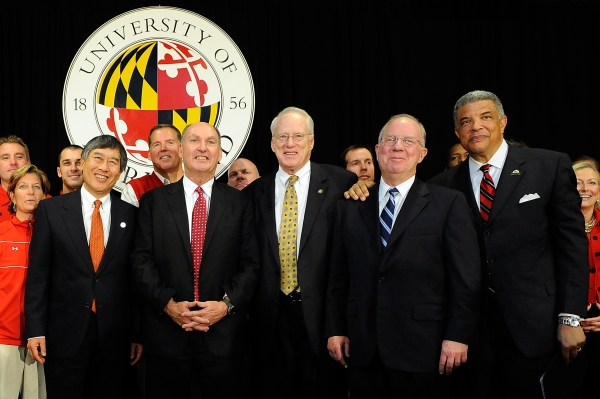
On November 20th, the University of Maryland at College Park announced that it would be leaving the ACC (not a slouch of an athletic conference by most standards) and becoming part of the Big 10 Conference.  It was a curious move for all sorts of reasons (e.g. with the exception of Pitt & Penn St., Maryland is not a geographical neighbor to any of the other member schools of the Big 10), not the least of which being the way the decision was made and announced--the Board of Trustees started and finished the process in under three weeks and some regents weren't aware of the final decision until hours before it was announced to the media.  

Not surprisingly, finances played a big role in the decision and in providing a rationale for the move, Maryland President Wallace Loh made a rather interesting statement about Maryland's future potential to use the athletic department to subsidize other parts of the university (something many would call a pipe dream).  As reported in Inside Higher Ed, Loh has publicly declared that "substantial funds" from Maryland's new revenue stream as a member of the Big 10 Conference will be used to support the educational mission of the university, specifically through financial aid for needy students.  Loh then asserted that Maryland is "doing nothing less than developing a new financial paradigm for intercollegiate athletics."

On its face, Loh's statements and ideas seem laudable.  What could be better for college athletics than an institution where the athletic program, rather than being a drain on institutional resources, puts money back into the pipeline and for needy students, no less. However, viewed another way, this is just another example of athletes--specifically, those who participate in high-profile, revenue-producing sports (which at most institutions means football and men's basketball)--whose talent is used to bring prestige and financial gain to the larger institution.  What's more, writers like William Rhoden, would argue that systems such as the one Loh is advocating for, have historical echoes to early American History when African American men were oppressed for the benefit of the more privileged class of American society.  In his book Forty Million Dollar Slaves, Rhoden provides a narrative of black athletes in the US (who, make up the majority of athletes of high-profile teams in Div. I college athletics).  He describes the evolution of professional and collegiate athletics in the US as one that led black athletes from literal plantations--where sports were used as a distraction to quell uprisings among slaves--to symbolic plantations where professional sports franchises and intercollegiate athletic departments continue to exploit black athletes' skills.

Critics of the views put forth by Rhoden and others are quick to point out that high-profile scholarship athletes receive scholarships that cover tuition, books, room, board, and virtually any other expense they might incur directly related to their enrollment in the institution.  Further, by providing opportunities to black athletes (often from urban areas and familial cultures where higher education isn't the norm) to attend college, the institution does much more than give someone a chance to play basketball, they change his life trajectory.

My purpose here isn't to argue for one position or another, just to raise some interesting questions about college athletics in general, and Wallace Loh's views in particular.  Is a free college degree and the opportunity for a better future enough "payment" for what an athlete (or team of athletes) brings in for a university?  And, how often does the four-year athletic scholarship really lead to the opportunities cited by proponents of big-time college sports?  What does it mean for one student (or group of students) to subsidize the cost of enrollment for another group of students?


Friday, November 16, 2012

Sending a message very different than the one we intend

Because I am a graduate student at the institution where I work, I receive an email each semester I am enrolled in courses (which at this point is every semester, because the sooner I finish my dissertation the sooner my wife can stop being an academic widow) inviting me to submit "student ratings" for the courses in which I am enrolled and the instructors who teach these courses.  Although I doubt the utility and value of the exercise, my sense of duty compels me to try to submit thoughtful ratings each semester.

I've completed this process at least twice a year for nearly the last 10 years; however, it wasn't until this morning when I was submitting my ratings for the current semester that I noticed this statement on the "Student Ratings Homepage:"

A message to students from President Samuelson

Student evaluations of BYU faculty and courses are extremely important.
  • Faculty are expected to consult them to improve their courses and teaching methods.
  • Department chairs are expected to review them annually with faculty to assess teaching effectiveness.
  • University committees consider them carefully as part of faculty reviews to determine who is retained and promoted.

Without your responsible input, we cannot effectively assess and improve teaching performance and student learning.  Please be honest, fair, and constructive as you complete your evaluations.
Your evaluations matter.
Thank you,
President Samuelson 
  
At first glance, posting a message like this on a webpage where students initiate the rating process makes sense.  An institution wants students to submit ratings, so someone on a committee suggests that a formal statement of support be made and displayed in a public place.  It is a very simple thing, doesn't require much time of anyone, and we can all feel good about being "supportive" of a particular initiative (in this case, student ratings).

However, one could offer a very different interpretation of the one above, which is the interpretation I made when I noticed the statement this morning.  A committee somewhere in the institution was charged with finding a way to increase student participation in the rating process, was told "these evaluations matter," doubted the truthfulness of that statement (the person who said it probably did too), a secretary somewhere drafted a statement, it was approved by the university president, and then "publicly" displayed but in a place and in a fashion that made it discrete enough that it wouldn't cause any problems or change any aspect of the cultural norms that prevail on campus with regard to teaching and learning (e.g. faculty can teach a course any way they want so long as they don't give inaccurate information, act abusively toward students, or teach anything that would make the Board of Trustees anxious).  The net result of the hypothetical process I've described above is that a very different message than the one originally intended becomes encoded in the way the explicit message (Evaluation Matters) is conveyed.  While the text of the message clearly states that the institution cares about student ratings, the tone of the message (e.g. its formality), the way it is displayed (on a webpage that 1/2 the student body visits and that probably 3% read), and the absence of this message in any other venue outside of the email sent to students (reminding them that their ratings are "important to the University and used in many ways"), convey a counter-message that student ratings are a necessary part of the institutional landscape but one that few of us really care about.

Again, the issue here isn't whether or not institutions should care about student ratings.  Rather, institutions should be careful to consider all of the components of a message, not merely text, when attempting to convey a message to students.  Factors such as tone, placement, repetition, consistency, and alignment with institutional practices will, ultimately, be much more powerful communicators than static text on a page or in the body of an email and communicate a hidden curriculum to students that can be quite impactful.  And, when these factors have the potential to communicate a message very different from the one intended, institutions run the risk of coming across as insincere, bureaucratic, and naive.

For a great example of holistic messaging that really conveys the message an institution wants students to hear and embrace, see Westminster College's message about e-Portfolios from former president, Michael Bassis.  Contrast the amount of time, energy, and thoughtfulness that went into this messaging with the message I referenced above from my own institution.  Could a student doubt that Westminster College values e-portfolios after watching a taped message from the President and then reading through an e-portfolio that he created himself?  Very different from the message that would have been conveyed had the college opted for a static text-based message on an obscure webpage.


Friday, November 9, 2012

Another exploitation of athletes . . . this time in the NFL

I've written before on this blog about the problem of exploitation among athletes in high-profile sports (i.e. football & men's basketball).  Thanks to Allison Morris from Accountingdegree.com for sharing this graphic that explores a problem associated with the NFL, namely the high rate at which retired players experience financial duress (3 in 4 are in financial trouble within two years of retirement).  Clearly, the league cannot control the decisions of its players, but this work raises interesting questions about what role major sports leagues should play in preparing players for their post-athletic futures.  How much responsibility does an employer like the NFL bear to prevent these kinds of problems?


Please Include Attribution to AccountingDegree.com With This Graphic Benched and Broke Infographic

Friday, October 26, 2012

The trouble with inspiration

Christ in the Garden of Gethsemane, Carl Bloch
I'm a bit of a curmudgeon.  People that only know me casually might be surprised to hear that, but those who know me well know that I am easily frustrated with "inspirational" stories, raw-raw presentations intended to "motivate," and short "inspirational" quotes (I've tried for years to be a "quote" person, but in all but one case the quotes I write down on a sticky note and stick on my wall seem disappointingly mundane a day or two after I am "inspired" by them--the single quote I have kept and still refer to comes from artist Carl Bloch in describing his struggles to create:  "God helps me--that's what I think, and then I am calm.").

I was reminded of this when I read an email this morning (which is actually a blog post that is sent out to a listserv) in which the author described being asked by a student to "define in one sentence what it means to be a 'true teacher.'"  The rest of the post went on to describe how he came to his "one sentence" that he eventually shared with her (you can read the post to find out what he told her).  Because I've read posts by this author before, I wasn't surprised at being underwhelmed by what he told this student.  It was a statement that sounds nice, but for me, has no real meaning because it is so abstruse and esoteric to provide no real guidance for someone who wants to be a good teacher.  So, while it may be initially inspirational to this student, it isn't likely to change anything about her teaching practice.

The reason I have appreciated and benefited so much from the Bloch quote above, I think, is that it has a concreteness that is helpful to me when I am feeling overwhelmed with a writing project, a troublesome situation with a student, or some other challenge that I don't know how to face.  At the same time, it isn't so explicit that it seems mechanical or restrictive.  Additionally, it has a narrative quality to it in that it calls up an image in my mind of a real person (Carl Bloch) struggling with a task and then thinking about the divine help that he is entitled to as an artist.  So, in that way it is both inspiring and instructive because it seems tied to someone's actual experience.

It occurs to me that we might often look in the wrong places for inspiration.  My experience suggests that it isn't found in philosophical statements or high-energy Joel Osteen-esque speeches.  Rather, inspiration comes when we have a window into the experiences of another.  What I might be arguing here (and which I've argued multiple times on this blog) is that rather than searching for one-sentence inspiration that is easily posted on the corner of our computer monitor, we should be searching for, telling, and listening to stories that have meaning because of their embeddedness in our actual experiences.  This takes time.  And, it also means entering into relationships with others in order to gain access to one another's stories.  It also means being vulnerable because anytime we tell a story about ourselves, we expose some part of our being that can then be evaluated, judged, or critiqued.  Telling a story is much more risky than giving an impersonal one-liner divorced from any of our actual experiences.

So, while the blog author whose post I referenced above (along with everyone else who has ever tried to say something inspirational) surely means well, his student would have been better served by a rich and personal story, as opposed to the sticky-note-ready quote that was likely forgotten as soon as the sticky on the note dried up.


Friday, October 19, 2012

Incentives & Risk-Taking in Admissions

One of the most interesting phenomena in higher education is the admissions process.  Students develop ulcers over it; parents shell out cash to hire professional admissions consultants to give their child the best shot at getting into their top-choice school, and those hearty souls who work in enrollment management stay up nights trying to figure the whole process out.  I have never worked in admissions and probably won't at any point in my career, so I realize the danger in commenting on something that I probably don't know enough about as I should.  That said, it seems that the ultimate objective of an admissions office or department is to admit those students who (a) will persist to graduation and (b) provide a good "value" for the institution in terms of the cost of providing an education to that particular student.  Consequently, the "golden egg" for a particular school is , so to speak, a highly academically qualified student who can pay the full sticker tuition price, whatever that might be.  Of course, this is an oversimplification and doesn't generalize to every type of school (e.g. an open admissions institution whose mission is to provide educational opportunity to populations that have, historically, been underrepresented in higher education.

But, for the sake of argument (and so that I have something to write about today), let's assume that the above situation holds for at least a hefty percentage of the mildly selective institutions in the U.S.  In this case,  there is an incentive for an institution to minimize risk by only admitting those students that (a) seem nearly certain to succeed or (b) are relatively likely to persist to graduation and won't cost the university too much money if they aren't retained.  Clearly, a system like this decreases the likelihood that certain students will be admitted.  And, it raises questions about these institutions' commitment to educating more than just a very narrow segment of the prospective student population.

What if, however, institutions were rewarded for taking risks in the admissions process?  What if there was some kind of incentive for an institution to admit a slightly underprepared student, provide a high-quality experience to that student, and achieve some measurable level of success with that student (e.g. graduation, job placement, etc.)?  Not only would a system like this one change the admissions game dramatically and provide more students with access to institutions where, previously, they would never have been accepted.  It would also encourage institutions to be more thoughtful about the resources and initiatives they have in place to support students that may not be as academically prepared as others.

As it stands, there really isn't much incentive at all for institutions to take risks in the admissions process (outside of situations involving student-athletes).  And, often, the institutions that are viewed as most "prestigious" are those that rather than taking risks and seeking out students to whom they can add value, admit those who are a "good investment" and who are likely to make the institution look good.


Friday, October 12, 2012

Designing to preserve risk & ambiguity

Typically, risk and ambiguity are things that we try to eliminate from our lives.  We make our kids wear helmets when they ride their bikes to decrease the risk of head injury.  We're given detailed instructions for how to put together complex appliances or pieces of furniture.  And, we make sure plastic storage tubs come with explicit warnings like this, to make sure there isn't any question about the inappropriateness of storing children in such containers.  Clearly, I'm being a bit facetious here, but the point is that most of us operate from the assumption that the more we can get rid of risk and ambiguity, the better things will go.

While this is true in some parts of our lives, there are some aspects of our experience where moderate degrees of risk and ambiguity actually improve our behavior and performance.  Take the design of roads as an example, as reported here and in much more depth in Tom Vanderbilt's interesting book, Traffic: Why we drive the way we do (and what it says about us).  The essence of the argument is that drivers are more cautious, more aware, more considerate, and ultimately more safe when roads are stripped of the features we've long believed make them safer (e.g. signs, dividing lines, large distances between roads and sidewalks, and width to name a few).  Road designers (largely in Europe, those West Palm Beach, Florida has seemed to catch on) have realized this and started to design roads that are just risky enough that drivers have to slow down and drive skillfully (which most of us can do when we are actually thinking about it--the problems occur when we are lulled into autopilot by the "safety" of the road).  It is an incredibly interesting approach and one that will likely revolutionize urban planning and road design in the future (it is a philosophy first pioneered by a Dutch traffic engineer--Hans Monderman)

Risk is a theme I've taken on in this blog a number of times.  I think it has tremendous implications for learning.  My current wondering has to do with what it might mean for higher education institutions to embrace risk and ambiguity in calculated ways.  College campuses are full of the equivalent of road signs and safety features, meant to "protect" students and get them where they're going in a metaphorical sense (be it a job, graduation, or just becoming an engaged citizen).  We have advisement centers and student support services that notify students that they are on academic warning, reminders about graduation deadlines, policies preventing students from enrolling in more than a specified number of credit hours, and course catalogs that attempt to remove ambiguity by clarifying and outlining hundreds of policies and processes relevant to a particular campus.  I'm not ready to say that we should think about getting rid of any or all of those things.  However, I wonder if in our effort to protect students through our various policies, support services, and "clarifications" we might actually be causing more problems than we're solving.  And, are there "risks" that we might allow to become more visible and instructive so students approach their experience with a bit more caution and concern than they might otherwise?

A quick example--the course syllabus.  This great column from Inside Higher Ed (you really should read it, if nothing else, you'll laugh) illuminates the tension instructors face between including so much information that the document becomes laughably long and painfully detailed, and failing to outline the course w/ enough clarity so as to avoid "scandals" that arise when students question policies or procedures.  There is an inherent risk in a faculty member having a thin syllabus.  If the expectations for the course, course policies, and schedule aren't made unambiguous, students may not learn what they need to, we may have an argument with them about absences, or they may not know what to do in the event there is a Tsunami and they aren't able to get to campus for class.  But, when a course is so structured that the syllabus comes to be viewed as a recipe, that if followed leads to learning, we're in trouble.  From my own experience, I can say that when the syllabus outlined exactly what I had to do to earn my "A," I did that and nothing more.  Typically, the course became a hoop jumping exercise.  It was clear and safe, but I didn't learn much.  In contrast, I have had a few classes where ambiguity reigned supreme.  Initially, it was very frustrating for me as a learner because I wanted to know what to do, when to do it, and how to report back that I had done it.  But, the ironic thing is that the ambiguity increased risk and often nudged me to do much more and better work than I would have otherwise.  I don't know that this type of course design is a universal solution; however, designing for learner autonomy can lead to great motivation for some populations of students, particularly high-achieving or self-directed students (see Dan Pink's book Drive for a great discussion of this idea).

Of course, campuses must still be physically safe spaces and be structured in ways that allow students to feel comfortable enough that they aren't perpetually thinking about leaving; however, a little risk might go a long way in improving overall outcomes.

Friday, October 5, 2012

What is the equivalent of the opening hymn for a campus community?

Recently, I've spent a fair amount of time exploring this website, dedicated to phenomenology.  Yesterday I stumbled across an essay with the intriguing title "The Experience of Singing Together in Christian Worship."  One aspect of the "singing together" experience that is explored in the essay is the potential for the act of singing to bring together the members of a worship community.  This vignette captures it well:

"When I enter the chruch, I see that most people in the pews are sitting and talking to their friends, probably getting caught up on the news of each other's lives.  It is an interesting sight and sound; a sort of gian living room with people relating plitely to each other, their voices creating a gentle rumble.  At 11:00, the worship leader announces, 'Let's stand and sing our praises to God,' and the musical introduction begins.  It's amazing the change in atmosphere as the chatter stops and we begin to focus.  One kind of sound stops and another begins as we start to sing.  The individual conversations stop and we sing the opening hymn as one great, united proclamation."

As I read that description of one worshiper's experience, I immediately thought of a similar thing I have witnessed on my own campus.  We are a faith-based institution and, as is common among institutions of this type, we have a weekly devotional service (Tuesdays @ 11:05 a.m.) where the campus community comes together to hear a speaker or view some kind of cultural performance.  One thing that has always fascinated me is the way these meetings begin.  Just like a church bustles with conversation and action before the beginning of a service, the large building where BYU's devotionals are held is alive with students pouring in the doors and lively conversations.  However, when the clock hits five after the hour and it is time to formally start the meeting, there is no formal pronouncement from anyone (e.g. "Let us begin," etc.).  Rather, the organist begins playing, the text to that morning's hymn appears on a video screen in the center of the assembly hall, and we begin to sing.  It's a remarkably simple and effective way of focusing the attention of a fairly large group (I would guess somewhere in the neighborhood of 3,000 - 4,000 students & faculty most Tuesday mornings).

There is something selfless about hymn singing in a congregation of worshipers.  We shift attention from our individual concerns, and join together in singing a hymn we haven't chosen (unless you happen to be the person who has that assignment).  We each contribute in our own unique way, but our voices come together to form a unified chorus.  And, at times, it can be an incredibly sublime and uplifting experience for individuals as well as the collective group.  Perhaps the selfless nature of the act has something to do with this.

As I read the essay I found myself wondering whether their is anything that happens on a college campus (aside from faith-based institutions who sponsor devotionals or "chapel hour" as it was referred to at my first alma mater).  Academic institutions have an inherently selfish tone in many respects.  Students pursue their own academic majors, faculty members conduct their own research, and each department generally has its own set of concerns and challenges.  At times, there is very little drawing us together as a campus community.

Part of me wonders whether this is much of a concern for academia.  Is it even true that one of the purposes of an academic institution is or should be to draw its members together?  That's a question that can only be answered by individual institutions.  But, if unifying students, faculty members, and others on a campus is one of our aims, we should take care to find ways of doing so on a regular basis.  And, whatever we come up with should be something that invites us to give up a bit of our selves and join with others in working towards a common goal.